
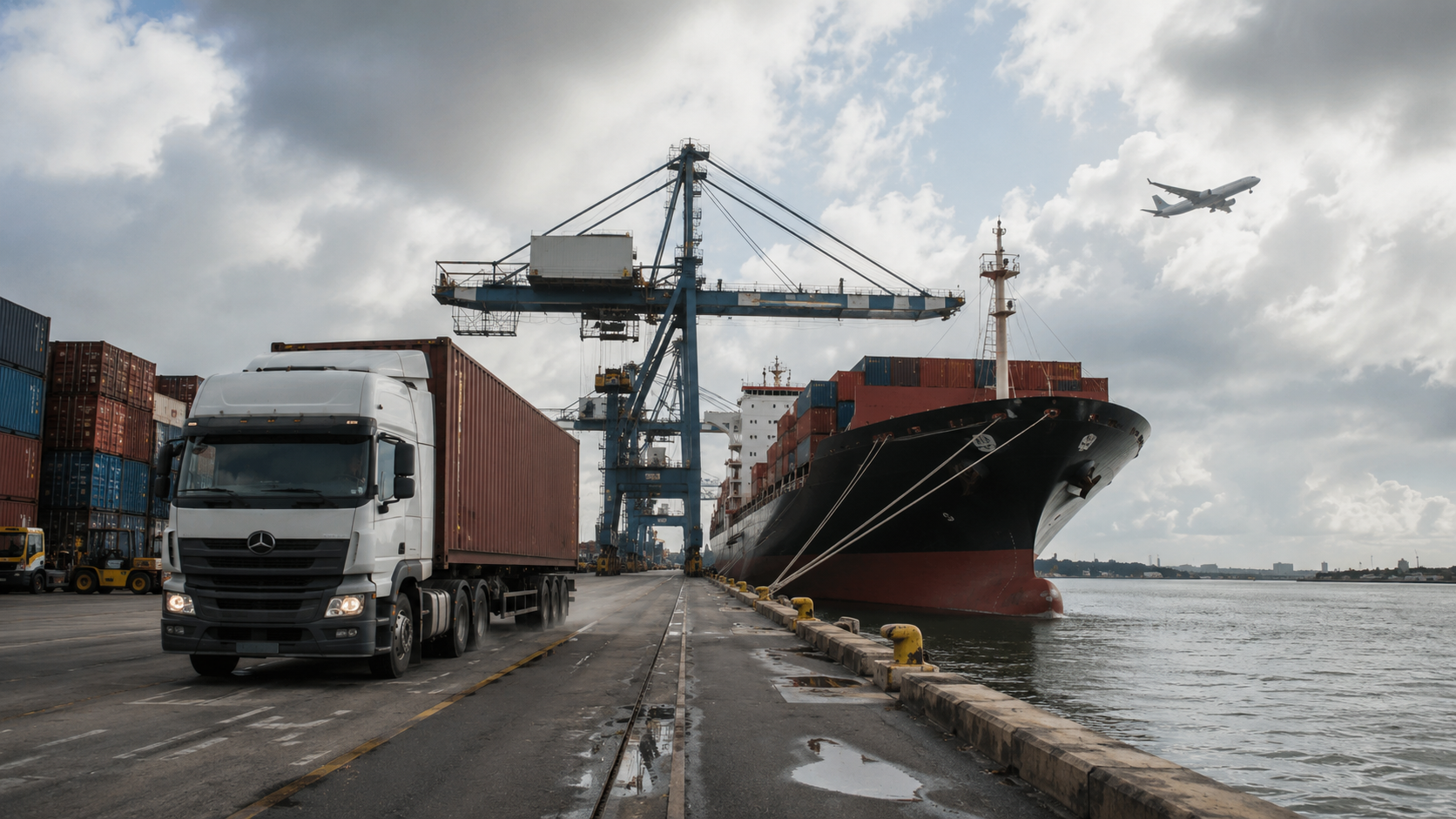
Choosing the right mode of transport directly affects delivery speed, cost and reliability. However, the best solution is not always the most obvious one – what matters is what the delivery must achieve for the customer’s business.
The same company may use road transport for daily deliveries, sea freight for importing larger volumes of goods and air freight when the timetable is critical.
Different modes of transport are also often combined within the same supply chain.
For this reason, the choice is not merely a technical question of transport method, but part of the customer’s overall logistics solution.
Road transport – flexibility especially within Europe
One of road transport’s greatest strengths is flexibility.
Goods can often be collected directly from the sender’s warehouse and delivered to the recipient without multiple intermediate stages. This makes road transport a natural option, particularly within Europe.
Transport can range from individual pallets to part loads and full loads, depending on the volume of goods, timetable and cost objective.
Road transport is often a good option when flexible collection and delivery, a reasonably fast transit time and the ability to respond to changing situations are required.
Sea freight – a cost-effective solution for large volumes
When transport distances increase and volumes are large, sea freight is often the most cost-effective option.
It is used especially in intercontinental transport, where the cost of air freight could easily become high relative to the value of the goods or the urgency of the delivery.
Sea freight offers the advantage of moving large quantities of goods at once. In return, delivery times are longer and schedule planning becomes more important.
Sea freight is well suited to situations where volumes are large, the delivery can be planned sufficiently far in advance and cost efficiency matters more than speed.
Air freight – when time is critical
Air freight is the fastest option, but usually also the most expensive.
It is therefore used particularly when a delay would cost the customer more than the transport itself.
This may involve a critical component needed for production, an urgent spare part or a situation where keeping a customer promise requires faster-than-usual transport.
Air freight can also be a justified option for small, high-value shipments where speed is particularly important.
Price is only one part of the decision
A mode of transport should not be chosen on freight price alone.
The decision is influenced by factors including delivery time, the volume and nature of the goods, delivery reliability, available inventory levels and what a possible delay would mean for the customer’s own business.
A cheaper transport option can become more expensive overall if it leads to extra warehousing, a production interruption or the need for an urgent replacement delivery.
Conversely, there is no reason to pay for the fastest possible transport if the delivery timetable does not require it.
The right solution starts with the customer’s needs
A good logistics solution starts before the mode of transport is chosen.
First, it is necessary to understand what the delivery must achieve: when the goods need to arrive, how large the shipment is, how much flexibility there is in the timetable and what happens if the delivery is delayed.
Once these questions are clear, different options can be compared and the solution best suited to the situation can be selected.
From Lavrenta’s perspective, the customer does not need to know in advance whether a shipment should travel by road, sea or air.
It is enough for the customer to describe their needs. The task then is to find a transport solution that works.
First define the need. Then choose the right way to transport it.